Vasileios Kalaitzidis

Visiting Research Student at the AstroParticle and Cosmology Laboratory (Paris) / Tsung-Dao Lee Institute (Shanghai).

More

LinkedIn · Email · CV

About

My name is Vasileios Kalaitzidis and I am from Athens, Greece. I am currently a Visiting Research Student at the AstroParticle and Cosmology Laboratory (APC, in Paris) and the Tsung-Dao Lee Institute, Shanghai Jiao Tong University (TDLI, SJTU), working on ultra-high-energy γ-ray astrophysics using the Large High Altitude Air Shower Observatory (LHAASO) under the mentorship of Dr. Gwenael Giacinti and Dr. Hao Zhou.

I graduated from the University of St Andrews in 2025 with a Master’s in Theoretical Physics (MPhys, First-Class Honours). My Master’s thesis was completed under the supervision of Dr. Martin Dominik, and I also spent a semester at Purdue University in 2024 as an exchange student. I was also a Gruber-funded Research Student at the European Southern Observatory working with Dr. Pooneh Nazari, and I have carried out Royal Astronomical Society (RAS)-funded research supervised by Dr. Indranil Banik.

My broader interests include γ-ray astronomy, protostellar systems, and cosmology.

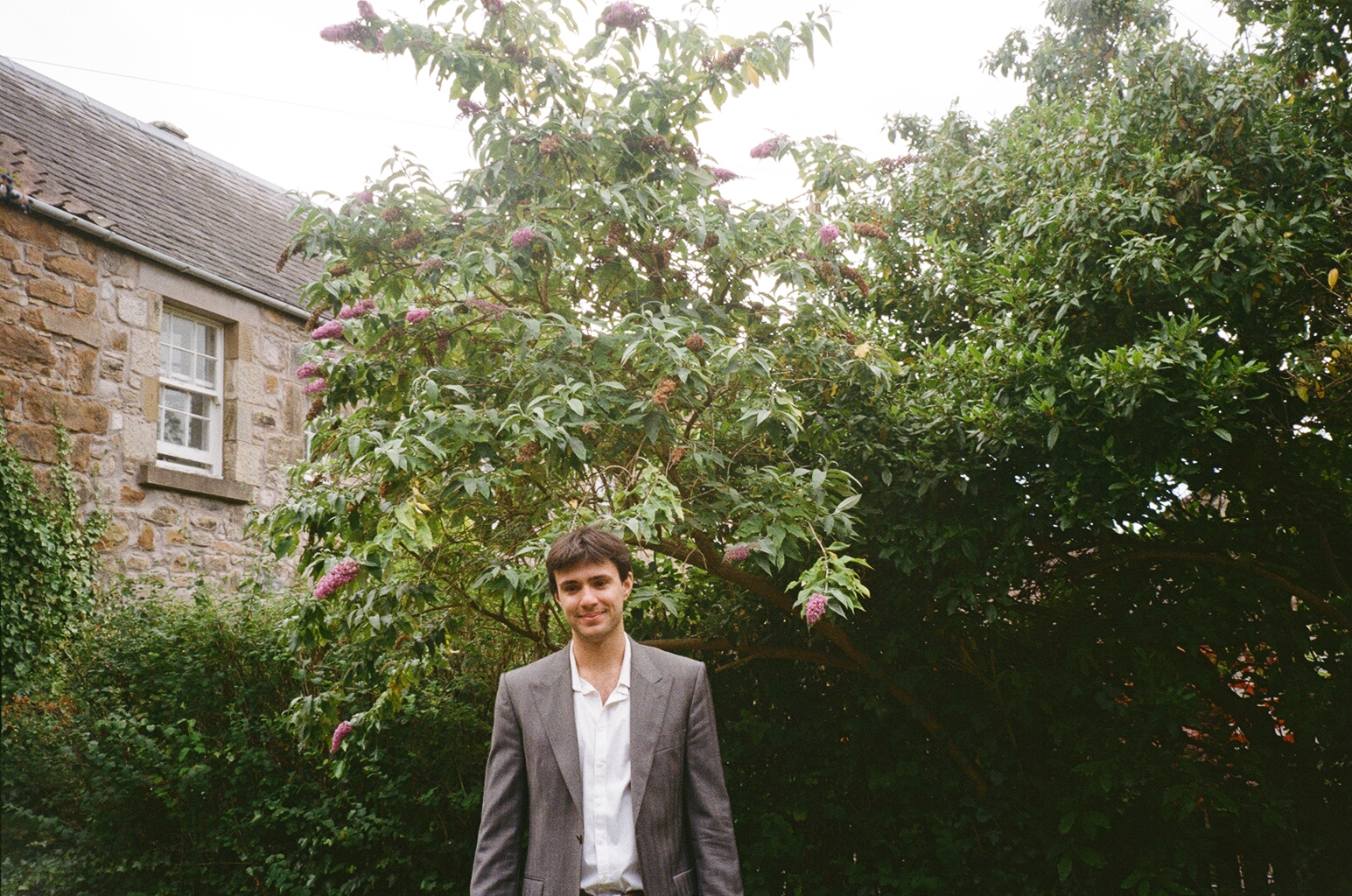
About image

Research

Interests and Past Studies

My research spans a wide range of topics in astronomy. I study protostellar systems and how structure and evolution can bias chemical abundance measurements. I am also interested in the Hubble tension and the viability of proposed solutions to alleviate it. Furthermore, I am actively working on explaining the recently observed ultra-high-energy diffuse γ-ray excess. Finally, I am extending my Master’s thesis on using gravitational microlensing data, alongside numerical and machine learning techniques, to probe stellar atmospheres.

Chemistry of Protostellar Systems

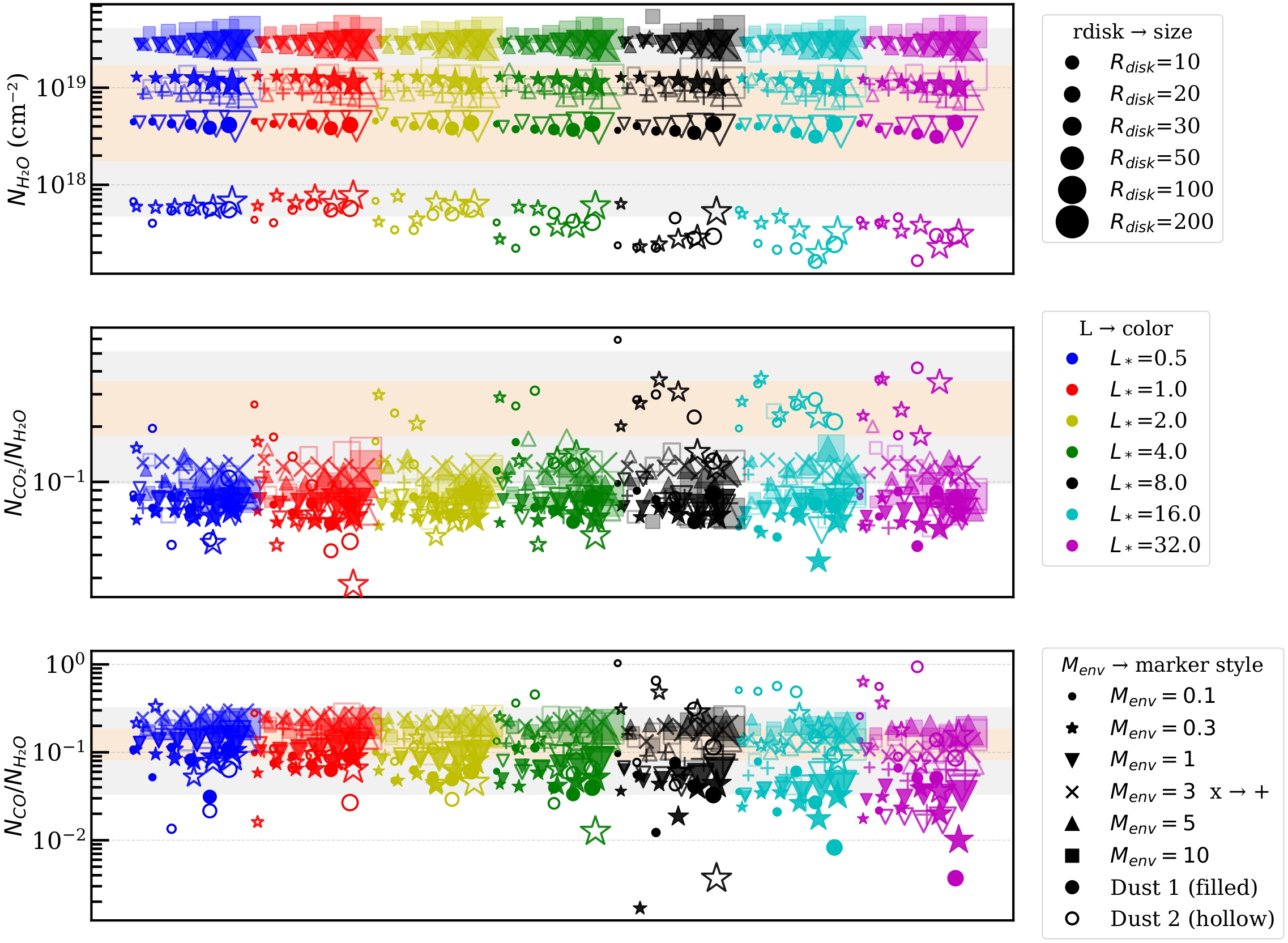
In my research on the chemistry of protostellar systems at the European Southern Observatory (Summer 2025) with Dr. Pooneh Nazari, we focus on understanding recent mismatches between gas and ice abundance ratios reported by the JOYS survey. We employ radiative-transfer modelling to test whether varying physical structure alone can reproduce these observational differences, or if more complex chemistry is required. We find that structural effects can drive order-of-magnitude shifts in the inferred column-density ratios, meaning geometry and disk or envelope conditions can strongly bias what we interpret as chemical differences.

Column densities

The Local Void and Late-Time Modification Solutions to the Hubble Tension in Cosmology

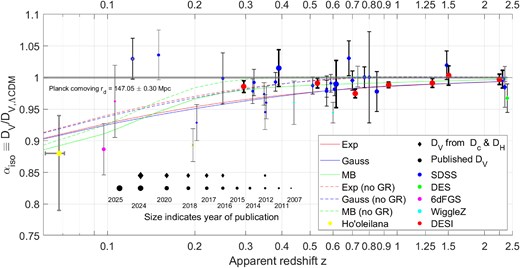
In a study with Indranil Banik, funded by a RAS summer student grant (awarded 2024), we tested whether a large local underdensity (a “local void”) can explain the baryon acoustic oscillation (BAO) data, and we found that void models fit a 20-year compilation of BAO measurements markedly better than a homogeneous Planck-based model, reducing the overall tension to roughly the 1σ level.

The research above was made into a Royal Astronomical Society highlighted research article.

In a separate project, I co-authored an analysis of modified gravity models in symmetric teleparallel f(Q) gravity, showing that some theoretically motivated forms struggle, while an exponential-type model can ease the Hubble tension but still runs into mild BAO consistency issues, highlighting how hard it is to satisfy all datasets at once. Finally, I have also contributed as a co-author to the CosmoVerse White Paper, which synthesizes the major observational tensions in cosmology, maps likely systematics, and outlines promising new-physics and analysis directions for the coming decade.

Column densities figure 4 Column densities figure 1

Explaining the Ultra-High-Energy Diffuse γ-ray Excess

I am currently (2026) engaged in research on the ultra-high-energy diffuse γ-ray excess observed in the Galactic plane by LHAASO. This work is being carried out at TDLI (SJTU) in Shanghai, China. Under the guidance of Dr. Gwenael Giacinti and Dr. Hao Zhou, I aim to investigate what fraction of the observed excess can be attributed to unresolved sources, such as pulsars, supernova remnants, and γ-ray binaries. I model their population and Galactic distribution, as well as propagation effects relevant for comparison to observations. Finally, I tune the results to the instrument response and masking used by LHAASO, producing HEALPix sky maps to compare simulations directly with data.

Diffuse gamma-ray figure

Probing Stellar Atmospheres Using Microlensing Caustic Crossings

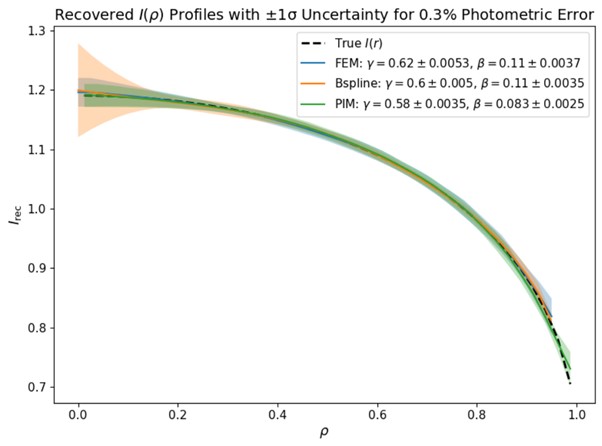
My Master’s thesis (submitted to the University of St Andrews in 2025), supervised by Dr. Martin Dominik, focused on recovering non-parametric limb-darkening profiles using caustic crossings, which has never been done for fold caustics. This was achieved using numerical techniques including the finite element method and product-integration methods to invert the Fredholm integral that connects the underlying stellar brightness profile to the flux observed during a microlensing event. I am currently (2026) working on publishing the results, and have extended the work to include machine learning inversion techniques that outperform the aforementioned methods significantly.

Poster showcasing some of the early stages of this work
Limb darkening recovery

Using Machine Learning to Distinguish Signal from Spurious Background Noise in the XENONnT Detector

During my time at Purdue University (Spring 2024), I collaborated with my classmate Divij Agarwal and the Purdue XENONnT group to build a machine learning classifier to separate signal from noise. With guidance from Dr. Husheng Guan, I developed, tuned, and evaluated several algorithms, comparing their performance on event classification. The data used to train the algorithms came from a yttrium-beryllium neutron source that emits neutrons at 152 keV. This was enabled by the fact that nuclear recoils from neutron scattering closely mimic those expected from weakly interacting massive particle interactions (dark matter candidates targeted by XENONnT), allowing neutrons to serve as a calibration proxy.

Poster I presented at the 2024 Spring Undergraduate Research Conference
Purdue XENONnT project

Publications


Address

No. 1 Lisuo Road, Pudong New Area, Shanghai, 201210, China.

© Vasileios Kalaitzidis